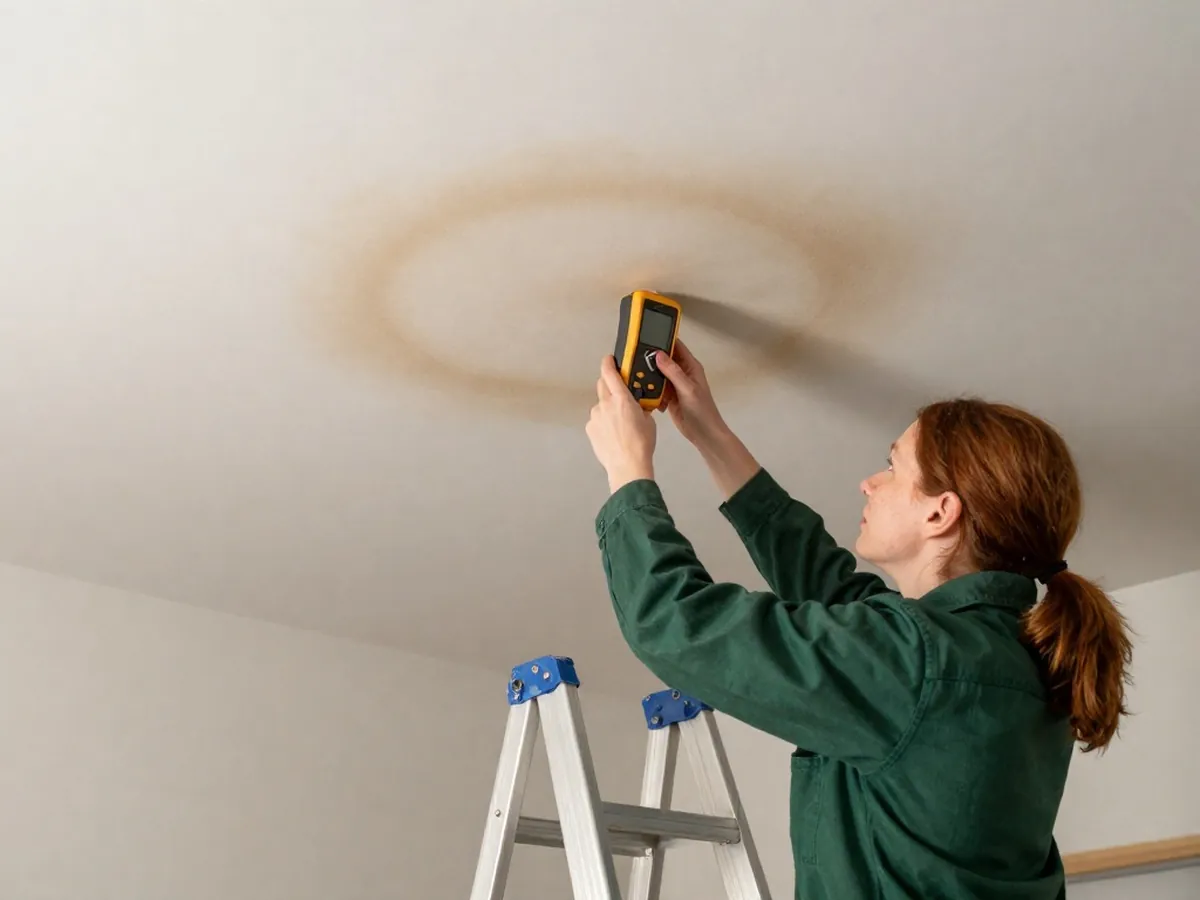
How far the water spread
A damp corner is a small job and a soaked floor is a large one. The contractor counts rooms and floors, then checks whether the water got into walls, ceilings or the space below. A stain on the ceiling of the floor below usually means the wet went through.
EPA points to a professional for significant water damage, and puts the mold cleanup line for homeowners at roughly 10 square feet.
What kind of water it was
Clean supply water, drain water and floodwater are three different problems. CDC says floodwater can carry sewage and other contaminants, and EPA sends sewage or other contaminated water damage to a professional experienced with it.
The dirtier the water, the more of the house the contractor has to look at, and the more that tends to come out.
For a backup from the county sewer line, Fulton County's North Fulton number is 404-612-3061.
What the water touched
Carpet and pad, drywall, insulation and cabinets each behave in their own way once wet. CDC says wall coverings, cloth, rugs and drywall touched by floodwater are thrown away when they cannot be disinfected. EPA adds that absorbent things like ceiling tile and carpet may be beyond saving once mold has set.
Hard surfaces that can be scrubbed and dried sit at the other end of the scale.
Where the wet sits
Water out on a floor is simple to reach; water hidden in a wall, over a ceiling or under the house is harder. The Red Cross calls a sagging wet ceiling heavy and dangerous, and a bulge adds a safety step before any work.
For crawl spaces, CDC says they dry out only with proper drainage and ventilation, and UGA Extension's checklist asks for a 6 to 8 mil plastic cover over the soil.
How long it sat
Time matters. UGA Extension's checklist asks for the source to be found and the area dry within 24 to 48 hours. EPA says not to wait, and CDC advises assuming mold when a flooded home sat shut for days.
A plain answer to "how long was it wet?" gives the contractor a starting point.
What the records show
A written record makes the job easier to describe. FEMA's checklist for an insurance claim covers pictures or video, an inventory of what was harmed, the cause and the receipts. Georgia's emergency agency also cautions that flood damage is often left out of property insurance, so the policy decides what applies.
Nothing on a public page promises that any given loss is covered.
The six drivers at a glance
- How far it spread
- Rooms, floors, walls, ceilings below and the space under the floor
- What kind of water
- Clean supply water, drain water or floodwater with sewage in it
- What it touched
- Carpet and pad, drywall, insulation, cabinets, framing
- Where it sits
- Out in the open, inside a wall, over a ceiling or under the floor
- How long it sat
- Hours, days or weeks between the water arriving and the first look
- What is on record
- Photos, an inventory of what was harmed, the cause, the receipts
Ready to describe the job?
Put the six facts in order: how far, what kind of water, what it touched, where it sits, how long, and what you have on record. Then read about burst pipe water damage or sewage backup cleanup, whichever matches the source.
Call (678) 679-2562 and describe the job in that order. Renting? Your landlord or building manager comes first.