Wet basements and crawl spaces around Roswell
Basement and Crawl Space Flooding in Roswell, GA
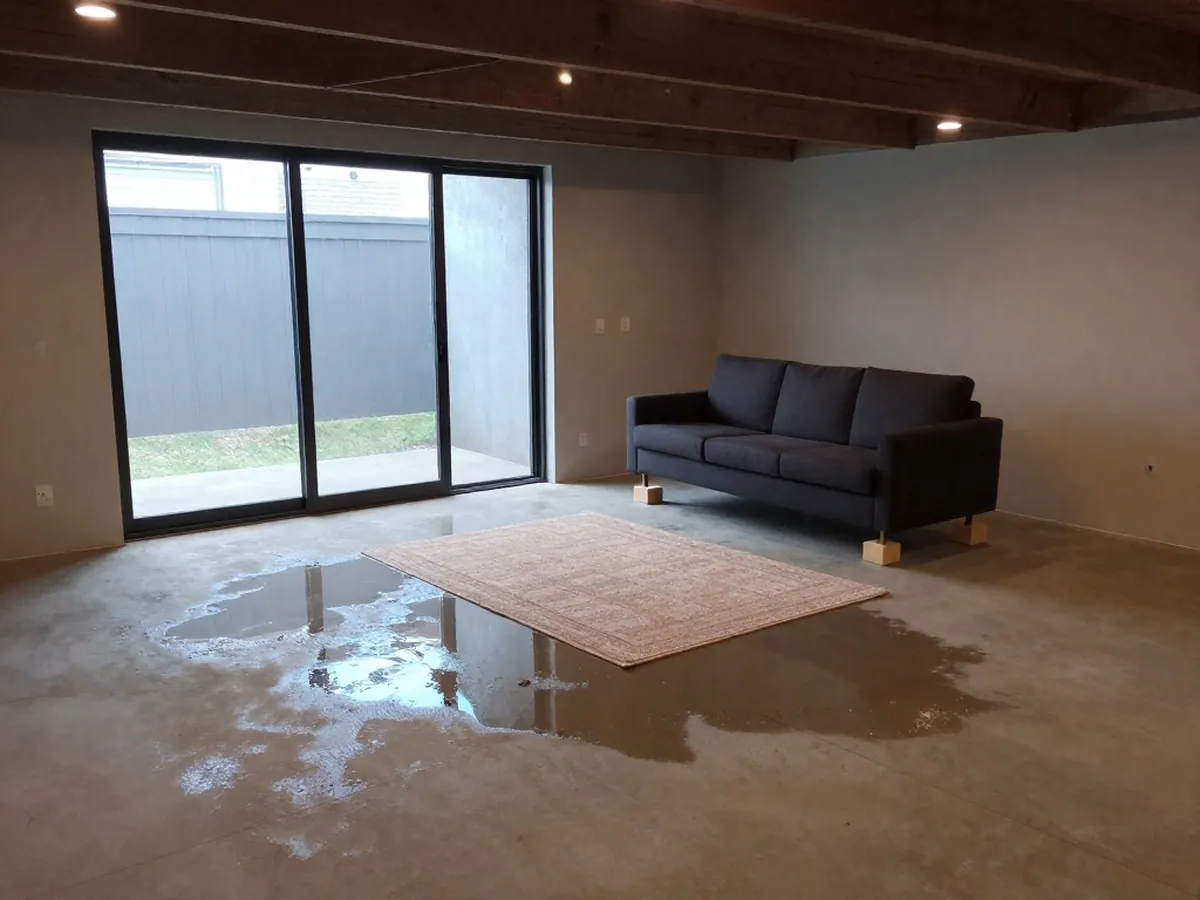
Did the water come in with the rain, or did something fail down there? A flooded basement or crawl space in a Roswell-area house can hide wet insulation, soaked wall bases and a damp subfloor overhead. Once the stairs are safe to use and the power question is settled, call (678) 679-2562 and report how deep it got.
Roswell-area notes
- In Johns Creek, a regulated floodplain covers about 6 percent of the city, and the city lists the Chattahoochee River plus Autrey Mill, Big, Cauley and Johns creeks as possible flood sources. Its page also notes that a typical homeowners policy does not pay for flood damage, so the policy itself is the document to read.
- GEMA says flash floods can reach their peak in only a few minutes, and that a flood watch means flooding may still occur six to 12 hours after the heavy rain has ended.
- For homes in flood-prone areas, GEMA suggests raising the furnace, the water heater and the electric panel, and moving furniture and valuables to a higher floor.
Back away and get help if
Water near outlets, a panel, a furnace or a water heater downstairs:
keep off the stairs and touch no switch. Call 911 or the electric utility for sparks, and leave the wiring to an electrician.
Smelling gas, or seeing a gas appliance standing in water, means leaving at once without touching a switch. Reports go to Atlanta Gas Light, 877.427.4321, or to 911, and are made from the yard.
A gas-powered pump, generator or pressure washer:
keep it outdoors, at least 20 feet from doors, windows and vents. A carbon monoxide alarm that sounds means everyone leaves and someone calls 911.
Water that came up through a floor drain or toilet:
do not touch it, keep children and pets upstairs, and call Fulton County's sewer line, 404-612-3061, from a dry spot.
Four trips down the stairs not to make
Going down to rescue boxes
CDC puts staying out of the water first, and a flooded basement can hide a live outlet or cord.
Keeping soaked cardboard and carpet
CDC says things floodwater touched that cannot be disinfected, among them rugs, cloth and drywall, get thrown away.
Closing the door on a damp lower level
CDC says to assume a flooded house that stays shut for several days has mold.
Looking only inside
EPA says to grade the ground so it slopes away from the house and to add gutters where they are missing, and the yard is where many basements start.
Looks from dry ground
Keep to looks from dry ground that feel comfortable. Anything that needs a ladder, a wet floor or a panel cover belongs to the contractor or an electrician.
- From the top of the stairs, note how deep the water is and what stands in it. Do not wade in.
- Look at whether the sump pump is running. UGA Extension's checklist says to confirm the pump works and the floor drain is intact.
- Walk outside and look at each downspout. UGA Extension wants them to carry water 6 to 10 feet from the foundation, over ground that slopes about 6 inches across that distance.
- Photograph the waterline on the walls and on stored boxes before anything is moved, and list what stood in the water.
Water that is still rising, and water that has stopped
Rising water means the stairs stay off limits until the power and the gas are sorted out. Once the level holds, the questions get simpler: how deep, how long, and what stands in it.
Call (678) 679-2562 when carpet, drywall or stored belongings have been wet overnight or longer, or when the crawl space still holds standing water.
Rebuilding below ground
Johns Creek asks owners to talk to Community Development before they buy, build or alter property in the regulated floodplain, and its page says repairs costing more than half a building's market value bring new-building rules. The paperwork page has the rest.
Pages behind these facts
- CDC, Safety Guidelines: Reentering Your Flooded Home (last reviewed 24 Aug 2026)
- CDC, Safety Guidelines: Floodwater (last reviewed 24 Aug 2026)
- University of Georgia Extension, Mold and Moisture Home Inspection Checklist, Circular 1083 (reviewed 1 Mar 2023)
- EPA, What are the main ways to control moisture in your home? (updated 18 Feb 2026)
- Georgia Emergency Management and Homeland Security Agency, Floods and Flash Floods
- City of Johns Creek, Flood Plain Management
- Fulton County Government, Emergency Repairs (Water Services)
- Atlanta Gas Light, Emergency information
Checked 1 Nov 2026