A musty smell or dark spots after water, near Roswell
Mold After Water Damage in Roswell, GA
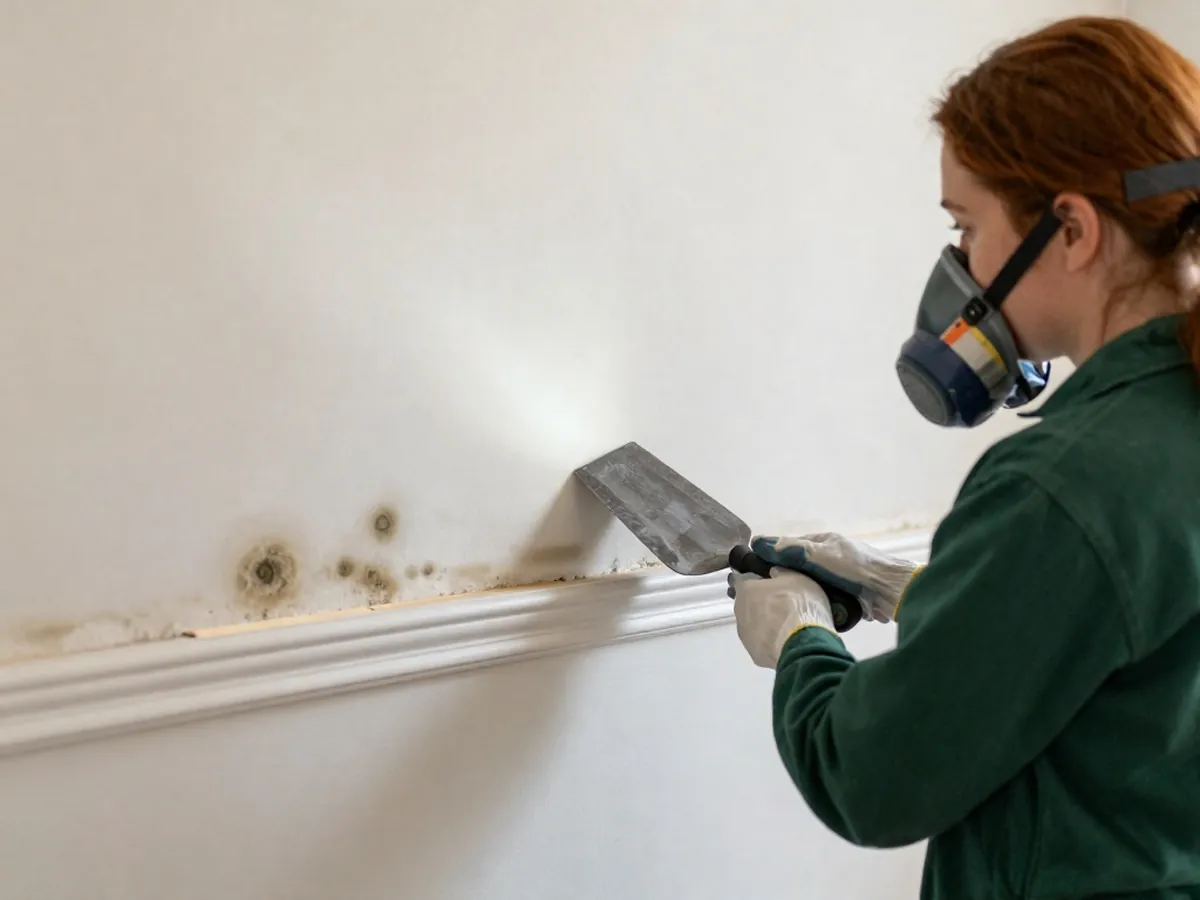
Did a wall stay damp after the leak, and does the room now smell musty? Dark spots and a damp odor after water damage in a Roswell-area house usually point to moisture that never fully dried. Call (678) 679-2562 and say when the water got in, where the spots are and about how large the area is.
Roswell-area notes
- Georgia's health department says it has no regulated indoor-air-quality program and offers no mold services. The same page adds that nothing enforceable at the state or federal level sets a standard for mold inspection, testing or cleanup.
- With no standard to lean on, the written scope carries the weight: the rooms, the materials involved and the photos or readings that show the work is finished are fair things to ask a contractor to put on paper.
- The same health department page points homeowners to EPA's guide to mold, moisture and the home, and to UGA Extension's Mold Quick Facts.
Back away and get help if
A wet room with outlets, cords or a panel in reach:
stay out of any standing water and touch no switch. Call 911 or the electric utility for sparking or a burning smell.
Gas odor in a damp utility room or basement:
go outside first. The report goes to Atlanta Gas Light (877.427.4321), and a strong smell is a 911 matter.
A ceiling or wall that sags with trapped water:
keep everyone out from under it. The Red Cross calls a wet ceiling heavy and dangerous.
Dark spots that followed sewage or other dirty water:
do not touch or scrub them. EPA says that kind of damage needs a professional experienced with it.
Four moves that give mold more time
Painting or caulking over the spots
EPA says to clean and dry first, since paint over mold is likely to peel.
Keeping porous things that stayed wet
EPA warns that carpet and ceiling tiles may be a loss, since mold is hard, sometimes impossible, to get out of them.
Aiming a fan across the room
CDC says to point fans outward so they do not carry mold around the house.
Waiting to see whether it spreads
EPA says not to wait, since mold damages whatever it grows on, and UGA Extension wants the source found and the area dry within 24 to 48 hours.
Looks from dry ground
Keep to looks from dry ground that feel comfortable. Anything that needs a ladder, a wet floor or a panel cover belongs to the contractor or an electrician.
- Look for dark spots or a musty smell in cabinets, on drywall and on wood, the places UGA Extension's checklist names. Photograph what you find.
- Estimate the size. EPA sets the limit for cleaning mold yourself at about 10 square feet, a patch roughly 3 feet by 3 feet.
- If you own a humidity gauge, read it. UGA Extension suggests a dehumidifier when the reading stays over 50 percent.
- Keep the heating and air system off if you suspect it is contaminated. Running it, EPA says, could carry mold through the building.
A few spots, or a bigger question?
EPA says a few spots on a hard surface can be scrubbed with detergent and water, then dried completely. A patch past about 10 square feet, spots that return, and any growth that followed sewage or dirty water are the cases it sends to a professional.
If yours is the second kind, call (678) 679-2562 and give the location and the day the water first got in.
What there is to check
Georgia's health department says mold inspections, testing and cleanup have no enforceable state standards, which makes the contractor's written scope the thing to ask for. The paperwork page explains what can be checked about any contractor.
Pages behind these facts
- EPA, Mold Cleanup in Your Home (updated 4 Jun 2026)
- EPA, What are the main ways to control moisture in your home? (updated 18 Feb 2026)
- University of Georgia Extension, Mold and Moisture Home Inspection Checklist, Circular 1083 (reviewed 1 Mar 2023)
- Georgia Department of Public Health, Indoor Air Quality (updated 12 Mar 2026)
- CDC, Safety Guidelines: Reentering Your Flooded Home (last reviewed 24 Aug 2026)
- American Red Cross, Checking Your Home: Structural Elements
- CDC, Safety Guidelines: Floodwater (last reviewed 24 Aug 2026)
Checked 1 Nov 2026