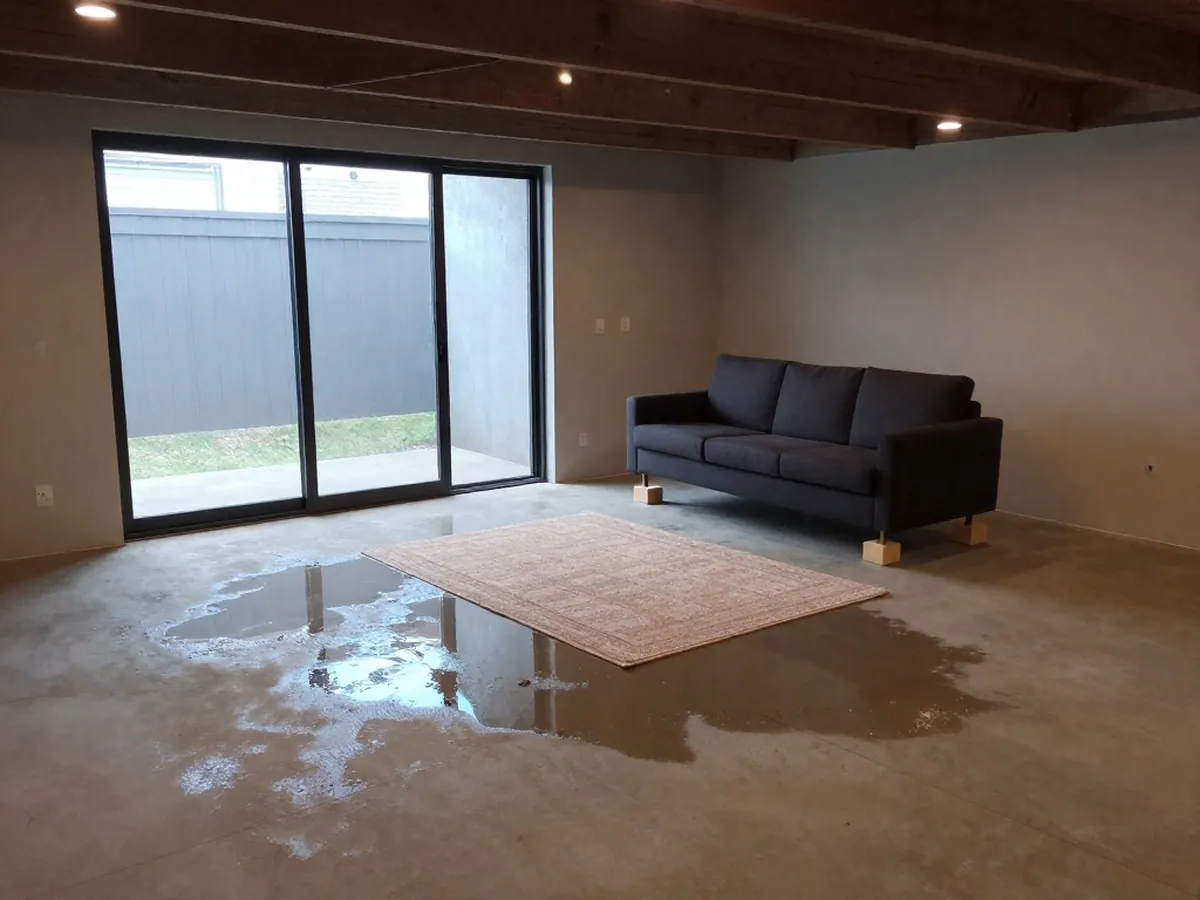
Is the water safe to touch?
It depends on where it came from. CDC treats floodwater as unsafe: it may carry human and animal waste, chemicals, debris and even downed power lines. Water from a drain or toilet counts as sewage, and the answer there is to stay out of it.
Water from a supply line is not floodwater, yet one danger is the same. If it has reached an outlet, a cord or a panel, the electricity is the risk, and CDC says to leave power switches alone while standing in water.
Who handles the water line and the sewer?
It depends on the town. In Roswell the city utility covers part of town and answers at (770) 641-3707 on weekdays, with police dispatch taking after-hours leaks at (770) 640-4100. Fulton County serves the rest, at 770-640-3040. Sandy Springs gets water from the City of Atlanta (404-658-6500, per the city). Johns Creek and Milton use Fulton County.
Sewer is simpler. For any sewer problem in North Fulton, Fulton County's number is 404-612-3061, day or night. A Milton home with no sewer bill probably has a septic tank, and the owner looks after it.
Will insurance pay for it?
Only the policy and the insurer can say. What the public pages do say is narrow. GEMA warns that property insurance does not usually pay for flood damage, and the Johns Creek floodplain page says as much of homeowners policies. FEMA's checklist for a claim lists the policy number, the insurer's contact details, when and why the damage happened, photos, a list of what was harmed and the receipts.
That list is a good reason to photograph first and discard later.
How soon does mold start?
No official page gives a day count for when mold first appears. UGA Extension's checklist asks for the source to be found and the area dry within 24 to 48 hours. EPA says not to wait, since mold damages what it grows on, and CDC advises assuming mold is present in a flooded home that stays shut up for several days.
Georgia's health department adds that no enforceable state or federal standard governs mold inspection or cleanup.
I rent. Whose problem is this?
Begin by telling the landlord or building manager. Repairs to the building are theirs to arrange, and they may have a contractor or an insurer to bring in. Photograph the water and the damage to your own things, and keep the dates.
An owner or manager of the property is the one who can call a restoration contractor.
Four more, one line each
- Can I run fans and a dehumidifier myself?
- CDC names fans, air conditioners and dehumidifiers for drying a wet area, with the fans pointed outward.
- What goes in the trash?
- CDC names wall coverings, cloth, rugs and drywall that cannot be disinfected, plus food the water touched.
- How big is too big for a do-it-yourself mold job?
- EPA draws the line at about 10 square feet, roughly a patch 3 feet by 3 feet.
- Is it safe to shower during a thunderstorm leak?
- GEMA says to avoid showers and baths while thunder is close, since plumbing can carry current.
When do I stop reading and call?
Stop when the answers stop matching your house. A wet floor that spreads belongs with water extraction and drying, and a basement that filled with rain belongs with flooded basements and crawl spaces.
Have the address, the room, the source and the age of the house ready, and call (678) 679-2562. Owners and landlords can call; tenants begin with the landlord.